Need a little productivity boost? Join our monthly newsletter and we’ll go/link you to the latest tips and trends in tech!
Earlier this year, GoProfiles — the AI-powered people and culture platform for engagement, recognition, and rewards — surveyed nearly 400 HR leaders to uncover their top priorities for the 2026 planning cycle.
The result: The State of HR 2026: Tech-First, Strategy-Driven — a data-rich report revealing how organizations are using technology to elevate HR’s strategic role, strengthen culture, and secure competitive advantage.
HR Budgets 2026: Growth Amid Uncertainty
Key Insight: Nearly half of HR leaders expect larger budgets in 2026, even as cost pressures and ROI scrutiny rise.
HR has evolved from a support function into a strategic growth engine powered by technology, analytics, and AI. But behind this transformation lies a key question: How are HR budgets in 2026 evolving to fuel the next phase of change?
HR Budget Outlook for 2026
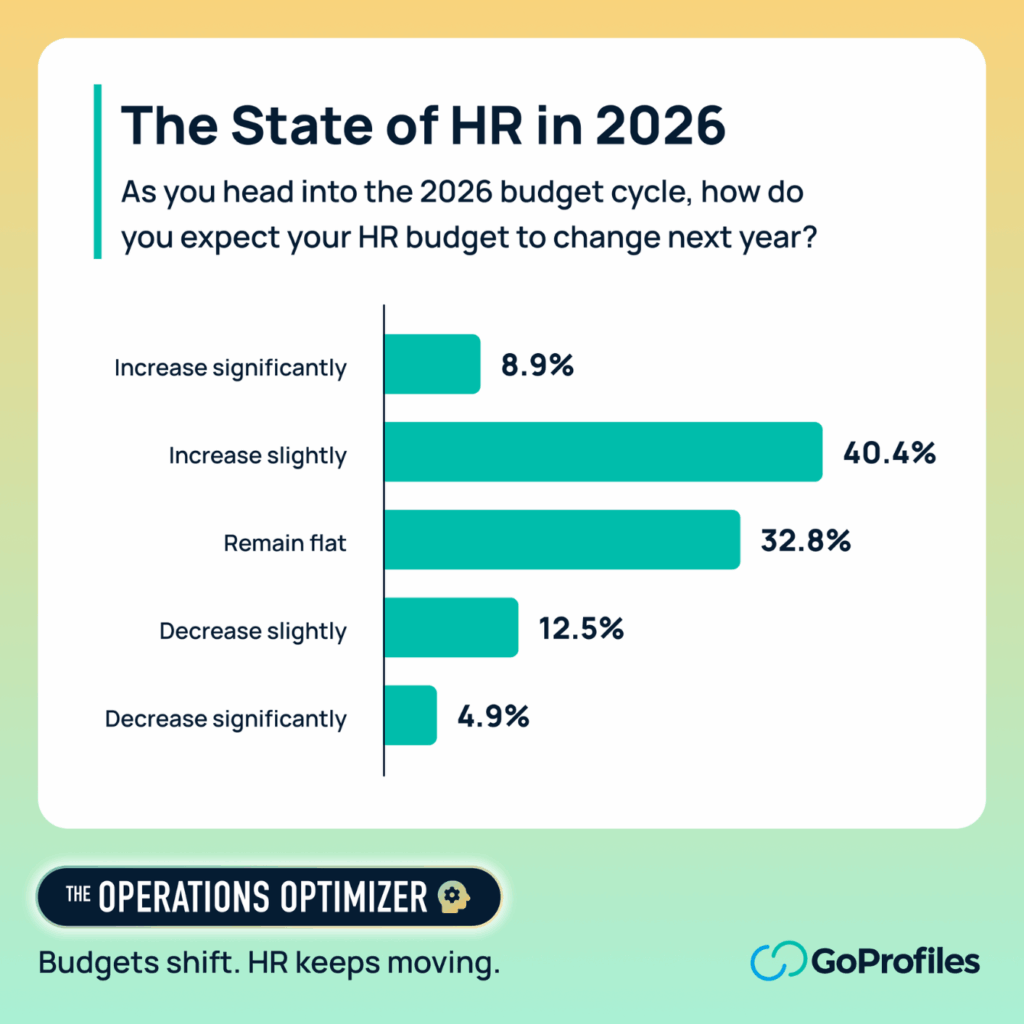
Nearly half of HR leaders expect budget growth in 2026, while about one-third anticipate steady spending. Despite economic uncertainty and increased financial scrutiny, HR budgets in 2026 remain strong — underscoring the growing importance of people, data, and technology to business success.
Growth Amid Economic Pressure
Why are HR budgets holding strong in 2026, even as other departments face cuts? The answer lies in HR’s evolution. Leaders are proving that strategic investments in people, technology, and analytics deliver measurable business impact — driving retention, engagement, and productivity.
Still, with rising ROI expectations, HR must show that every investment creates clear, organization-wide value.
A Balancing Act: Growth, Stability, and Scrutiny
While 49% of organizations expect HR budget growth in 2026, about 18% anticipate reductions. This underscores a delicate balance: HR is gaining investment but operating under closer financial scrutiny. Every initiative now needs to connect directly to business outcomes.
Why HR Budgets Are Growing in 2026
1. AI and Digital Transformation
The rise of AI and advanced analytics has repositioned HR as a performance driver. Budgets are flowing toward modern platforms that unify data, automate workflows, and support smarter decision-making.
2. Talent and Skills Shortages
As skills gaps widen, failing to invest in reskilling has become more costly than proactive workforce development. In 2026, learning, development, and strategic workforce planning command a greater share of HR budgets as leaders focus on building future-ready talent.
3. Employee Experience as a Business Imperative
Employee engagement and recognition programs remain top priorities. Even under cost pressure, leaders understand that cutting experience budgets threatens retention and culture.
Pressures Shaping HR Budgets in 2026
Not every organization plans to increase spending. About one in five expect cuts to their HR budgets in 2026, driven by:
Economic uncertainty: Inflation and market volatility continue to influence decisions.
ROI pressure: Boards want clear, measurable returns on HR and AI investments.
Competing priorities: HR funding often competes with product and operational budgets.
Where the Money Is Going: Tech-First HR Budgets
Survey data shows a clear tech-first spending trend — one in four HR leaders list HR technology, automation, and AI as their top investment for 2026. The focus is shifting toward scalable, data-driven tools that boost efficiency and elevate the employee experience.
Customer Story: Turning Technology into Connection At Rad AI, a remote-first company, embedding recognition into daily workflows with GoProfiles created a scalable, tech-enabled recognition engine that strengthened culture and boosted engagement.
What HR Leaders Should Do Next
As HR budgets grow in 2026, leaders must ensure every investment delivers measurable impact:
Link spending to outcomes. Tie HR initiatives directly to retention, productivity, and revenue.
Invest in scalable innovation. Use AI and automation to improve efficiency and elevate the employee experience.
Plan with flexibility. Build budgets that adapt to both growth opportunities and shifting market conditions.
“You should be able to speak to an investor or the street the same way your CFO would—with a people lens.”
—Jeri Doris, Chief People Officer at Justworks
The Bottom Line: HR Budgets 2026 Reflect Strategic Confidence
With nearly 80% of organizations maintaining or increasing their HR budgets in 2026, one thing is clear — HR is a strategic necessity, not a discretionary expense.
Investments in HR technology, AI, and analytics continue to grow, empowering teams to strengthen engagement, agility, and culture. As 2026 unfolds, the organizations that connect people investments to performance outcomes will lead the next era of work.
Discover how GoProfiles can help your team build stronger connections and drive measurable engagement. Try GoProfiles free today and see how recognition, data, and AI can power a more connected workplace.
Build a culture of connection and recognition with GoProfiles
What are HR budgets expected to look like in 2026?
Nearly half of HR leaders expect budget increases in 2026, while about one-third anticipate steady spending. This shows continued investment in people, technology, and analytics despite ongoing economic uncertainty.
Why are HR budgets growing in 2026?
Digital transformation, AI adoption, skills shortages, and the need to improve employee experience are driving growth. Organizations are investing in tools that deliver measurable ROI, efficiency, and engagement.
What are the main priorities for HR spending in 2026?
Top spending areas include HR technology, automation, AI, and learning and development. Many leaders are also allocating budgets for engagement, recognition, and well-being programs.
How are economic conditions affecting HR budgets in 2026?
While inflation and economic uncertainty create pressure, most HR teams are maintaining or expanding budgets by linking investments directly to productivity and performance outcomes.
What should HR leaders do to manage their 2026 budgets effectively?
HR leaders should connect budget decisions to clear business metrics, invest in scalable AI-driven solutions, and create flexible strategies that adapt to changing economic conditions.
Emily Deuser
Emily Deuser is Content Manager at GoLinks, GoSearch, and GoProfiles, where she helps enterprise teams cut through the noise around workplace AI and find tools that actually make knowledge accessible. She specializes in turning complex productivity challenges into clear, actionable guidance that helps teams work smarter every day.