Need a little productivity boost? Join our monthly newsletter and we’ll go/link you to the latest tips and trends in tech!
Key Insight: HR is no longer a support function in 2026 — it is emerging as a core pillar of enterprise strategy, performance, and long-term growth.
The Evolving Role of HR in 2026
In 2026, HR has moved beyond administration, compliance, and employee relations to become a strategic driver of business outcomes. HR leaders are accountable for enabling workforce performance, shaping organizational resilience, and supporting sustainable growth. Research from The State of HR 2026: Tech-First, Strategy-Driven shows this shift is no longer aspirational — it is measurable, operational, and accelerating across industries.
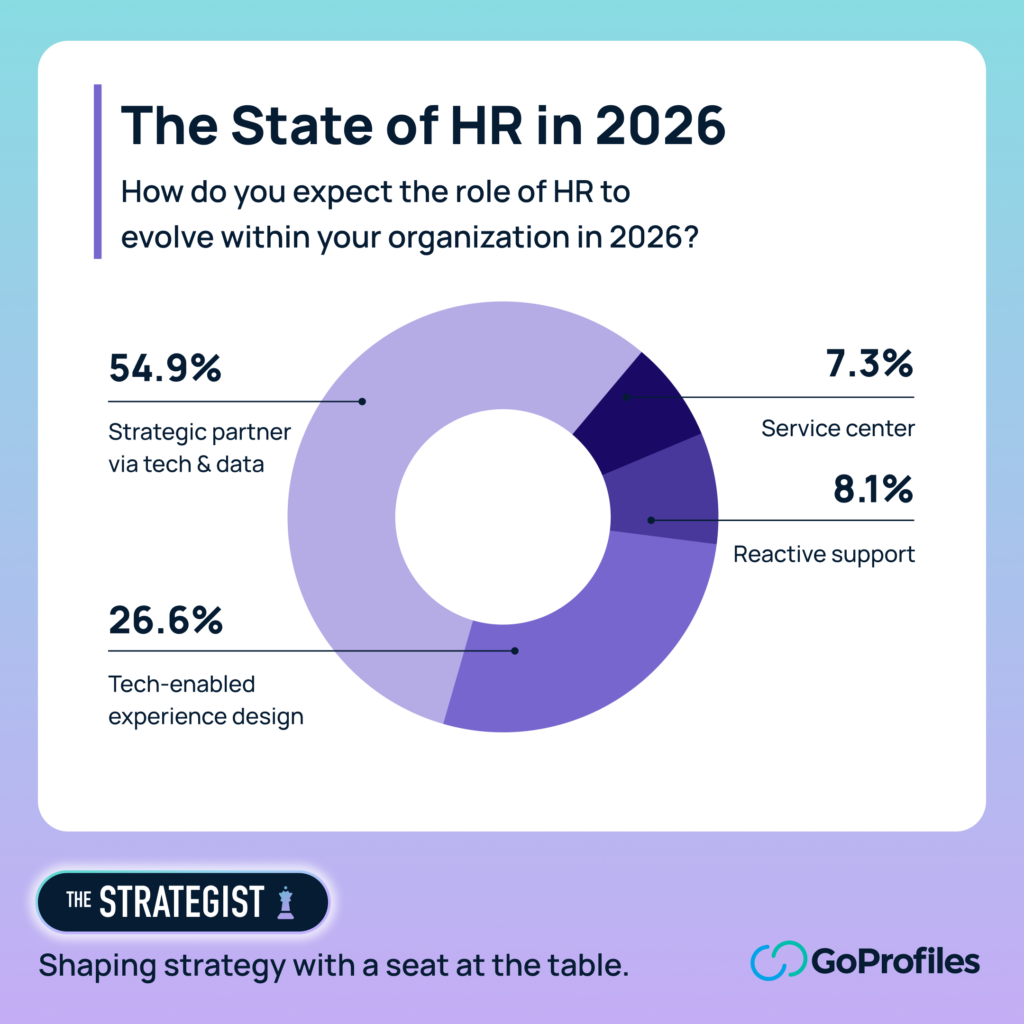
More than four in five HR leaders now expect HR to operate at the strategic core of their organizations. This shift toward strategic HR transformation reflects a growing recognition that people, data, and organizational culture are not support functions — they are essential drivers of competitiveness and long-term business performance.
From Support to Strategic Partner
The view of HR as an administrative function is outdated. For decades, HR focused on compliance, payroll, employee relations, and standardized processes. While these responsibilities remain essential, they no longer define HR’s strategic value.
Today, HR leaders are being asked different questions — about growth, performance, culture, and transformation:
How do we build a workforce with the skills needed for what’s next?
Which cultural strengths can be scaled to drive performance?
How do we design employee experiences that improve productivity and retention?
What forward-looking insights can HR data reveal about the organization’s future?
This new paradigm requires HR teams to pair operational excellence with strategic insight. It demands business acumen, data fluency, technological literacy, and the ability to influence executive decision-making at the highest level.
Why This Shift Is Accelerating
The evolution of HR is not happening in isolation. It is being driven by structural forces that are reshaping how organizations operate, compete, and grow. Three accelerants stand out.
1. Technology as a Catalyst
Advances in AI, analytics, and automation are fundamentally expanding HR’s ability to deliver measurable business value. Instead of reacting to issues after they surface, HR can now anticipate them through:
Predictive retention models that identify flight risk
Workforce planning tools built around skills and capacity
Sentiment analysis that surfaces cultural strengths and challenges
AI-powered insights that reveal performance gaps and emerging trends
As technology increases HR’s visibility into workforce dynamics, executives are relying more heavily on HR insight to inform enterprise-level decisions.
2. Talent as a Competitive Advantage
In a knowledge-driven economy, talent strategy is business strategy. Organizations that consistently attract, develop, and retain the right people outperform their peers. HR plays a central role by designing the systems, processes, and experiences that enable sustained high performance.
As a result, HR is no longer simply filling roles. It is shaping the workforce capabilities that determine whether organizations innovate, scale, or stall.
3. Employee Experience as a Differentiator
Modern employees expect personalization, flexibility, and a meaningful connection to their work. HR is leading the shift toward experience-driven organizations by designing:
Flexible work models
Personalized recognition and rewards programs
Data-driven engagement strategies
Culture systems aligned with organizational values
Organizations that deliver exceptional employee experiences see measurable gains in productivity, retention, and collaboration — reinforcing HR’s role as a strategic driver of performance.
Future-Ready HR: What the Data Reveals
Survey data shows clear momentum toward a more strategic, insight-driven HR function. Most organizations have already begun adopting the technologies and practices needed to support this shift. However, a smaller group remains anchored in reactive or service-oriented models — often constrained by legacy systems, limited resources, or misalignment between HR and business leadership.
To fully realize HR’s strategic potential, organizations must invest in five critical areas:
Modern, integrated HR technology
Workforce and people analytics
Leadership and capability development
Intentional culture-building initiatives
Skills development for HR teams
Organizations that make these investments now are better positioned to adapt, compete, and lead in a dynamic, AI-enabled workplace — where workforce strategy and business strategy are inseparable.
What This Means for HR Leaders
As HR’s role expands, leaders must evolve their strategies, metrics, and capabilities. Three imperatives define what comes next.
1. Redefine HR Metrics
Traditional HR metrics — such as time-to-hire, cost-per-hire, and turnover — remain necessary but insufficient. Strategic HR requires a shift toward business-impact measures that connect people decisions to organizational outcomes, including:
Retention of critical roles
Revenue per employee
Productivity and performance insights
Capability and skills readiness
Employee experience and engagement scores
Cost of attrition and time-to-productivity
Metrics that clearly link people operations to business performance are essential for influencing executive decision-making.
2. Leverage Technology for Insight — Not Just Efficiency
Translating analytics into executive-ready recommendations
Automating low-value administrative tasks to reclaim time for strategic work
Integrating data across the full employee lifecycle for deeper insight
This transformation is not about replacing HR. It is about amplifying HR’s impact across the organization.
3. Build Strategic Capabilities Within HR Teams
Future-ready HR organizations invest in developing capabilities that enable HR professionals to operate confidently at the executive level. The most critical capabilities include:
Business acumen
Data literacy
Change management
Cultural design
Leadership influence
AI fluency
As Robin Merritt, Chief People Officer at Gainsight, notes:
“Think like a CEO – leverage HR as a strategic lever.”
—Robin Merritt, Chief People Officer at Gainsight
The Future of Strategic HR in 2026
The future of HR in 2026 is strategic, intelligent, and tightly aligned with business outcomes. As AI matures and workforce data becomes more connected, HR is uniquely equipped to anticipate needs, guide decisions, and directly influence performance and growth.
Organizations that unify data, modernize technology, and invest in strategic capabilities are leveraging HR as a competitive advantage — not a cost center.
Book a demo today, and see how GoProfiles helps organizations turn HR into a strategic growth engine.
Build a culture of connection and recognition with GoProfiles