Need a little productivity boost? Join our monthly newsletter and we’ll go/link you to the latest tips and trends in tech!
Remote and hybrid work models have become the norm. Understanding how to navigate the challenges and opportunities they present is crucial for sustainable business growth.
In this HR GameChangers webinar, we brought together seasoned HR leaders to share insights on equipping organizations to thrive in this environment.
Hosted by Janelle Henry, VP of People at RadAI, the session focused on strategies for maintaining productivity, satisfaction, and cohesion within distributed teams.
For more HR technology insights, check out our previous episodes:
And if you’re not registered for the series, you can register here. And follow us on LinkedIn to never miss a moment!
Speakers
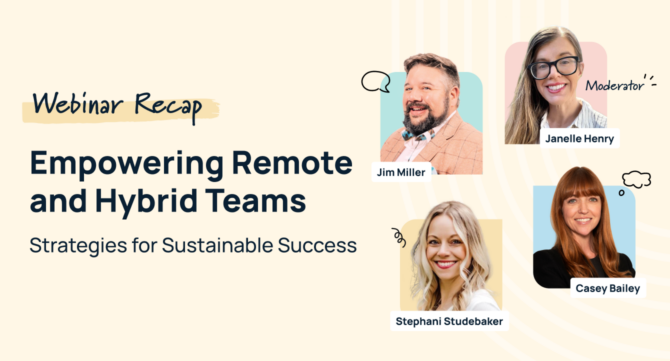
Janelle Henry: VP of People at RadAI (moderator)
Jim Miller: VP of People & Talent at Ashby
Stephani Studebaker: Head of People at Guidewheel
Casey Bailey: Global Head of People at Deel
Key Takeaways
Build Strong Remote Culture: Support async collaboration and trust across global teams.
Boost Retention with Data: Use employee journey mapping and feedback to improve satisfaction.
Improve Team Communication: Set clear guidelines to reduce noise and increase focus.
Prevent Burnout: Promote healthy boundaries and encourage time off.
Lead with Flexibility: Empower teams through clear frameworks and personalized leadership.
Use Smart Tech Tools: Automate tasks and separate work-life boundaries with tech.
Create Team Belonging: Host virtual and in-person moments that build authentic connection.
Learn strategies to improve remote and hybrid work. This session shared practical tips to tackle distributed team challenges and gave leaders tools to boost collaboration, engagement, and productivity.
Addressing Cultural Challenges in Remote and Hybrid Work
What are organizations’ biggest challenges when scaling culture in a remote or hybrid work environment?
As organizations expand across borders, maintaining a cohesive culture becomes a pivotal challenge. This is especially true in remote and hybrid work environments. Casey Bailey, Global Head of People at Deel, emphasized the importance of asynchronous work and building a sense of unity across diverse geographies. She shared, “We need to empower and engage teams to work asynchronously across time zones while fostering trust and empathy among team members.”
Janelle Henry highlighted the challenges faced by organizations as they transition from centralized office spaces to remote or hybrid work models. She noted that the lack of physical presence can lead to disconnects in communication and culture. To counteract this, intentional strategies must be adopted to ensure that cultural values are not only maintained but actively celebrated.
Enhancing Employee Satisfaction and Retention
How can organizations boost employee satisfaction and retention in hybrid work models?
The focus on employee satisfaction was a major theme. Bailey discussed a data-driven approach to understanding an employee’s first year in the company. “By mapping out the first 12 months of an employee’s journey, we can identify key moments and intervene to enhance retention and engagement,” she revealed. This involves identifying and addressing moments that matter and ensuring employees feel valued right from the start.
“By mapping out the first 12 months of an employee’s journey, we can identify key moments and intervene to enhance retention and engagement.”
—Casey Bailey, Global Head of People @ Deel
Transparency and open communication were also highlighted as key methods to build trust. Jim Miller of Ashby shared, “We choose to be transparent about our metrics and what we’re solving for. This builds trust and aligns organizational objectives with individual aspirations.”
“We choose to be transparent about our metrics and what we’re solving for. This builds trust and aligns organizational objectives with individual aspirations.”
—Jim Miller, VP of People & Talent @ Ashby
Are you transparent when addressing retention challenges within your company?
Miller confirmed that transparency is a cornerstone of Ashby’s strategy. By openly discussing retention metrics and goals, teams are encouraged to participate actively in shaping their work experience. This transparency fosters a culture of accountability and collective problem-solving, encouraging employees to engage deeply with organizational challenges.
Streamlining Communication in Distributed Teams
What are some best practices for streamlining communications across distributed teams?
Effective communication is the backbone of any successful remote team. Jim Miller provided insights into optimizing communication, emphasizing the inefficiency of default communication methods. “Every communication is a tax on someone else’s time,” he noted, urging teams to focus on clarity and effectiveness in their interactions.
Stephani Studebaker recommended setting clear parameters for communication to minimize interruptions. “Encourage teams to block core working hours for focused tasks, only checking emails or Slack outside of those hours,” she advised.
Balancing Real-Time and Asynchronous Communication
How do you balance asynchronous and real-time communication to maximize productivity?
Balancing synchronous and asynchronous communication is crucial in remote and hybrid setting. Studebaker emphasized the importance of personal communication guides for each team member. “Understanding how and when your manager or team prefers to communicate can significantly improve efficiency and reduce friction,” she explained.
This approach requires teams to adapt to the schedules and communication styles of their peers, promoting a more harmonious workflow. Clear expectations around availability and response times help mitigate misunderstandings and enhance team collaboration.
Addressing Burnout: Creating Sustainable Work Practices
What proactive steps can organizations take to prevent burnout, especially in remote or hybrid teams?
Burnout prevention was a critical topic, with Studebaker sharing strategies to model healthy leadership behaviors. “As leaders, we need to be crystal clear about our own boundaries and encourage our teams to discuss theirs openly,” she said. Leaders must demonstrate the importance of taking breaks and fully disconnecting during vacation.
“As leaders, we need to be crystal clear about our own boundaries and encourage our teams to discuss theirs openly.”
—Stephani Studebaker, Head of People @ Guidewheel
Bailey added that addressing root causes of burnout often involves examining team dynamics. “If someone feels they can’t disconnect, it might indicate a deeper systemic issue,” she noted. By analyzing and restructuring workflows to avoid single points of failure, organizations can distribute responsibilities more evenly, preventing situations where employees feel irreplaceable and overburdened.
Leadership Adaptations for Remote and Hybrid Teams
How should leaders adapt their management styles to better support remote and hybrid employees?
Leadership in remote and hybrid settings requires consistency and structured frameworks. Miller emphasized, “The more consistent you can be, the better your team will function autonomously.” By setting clear expectations and frameworks, leaders empower their teams to make decisions and operate independently.
Studebaker focused on the importance of humanizing interactions. “Viewing your team as individuals rather than just job titles fosters connections that enhance collaboration and trust,” she shared. Simple practices, like starting meetings with personal check-ins, reinforce a culture of care and understanding.
Technology as an Enabler for Remote Work Success
What role does technology play in enabling remote and hybrid team success?
While technology is a powerful enabler of remote work, it requires careful management to be effective. Miller discussed the importance of delineating work-life boundaries with technology. “Use technology to separate work from home life, ensuring that you’re present in whatever space you’re in,” he advised.
“Use technology to separate work from home life, ensuring that you’re present in whatever space you’re in.”
—Jim Miller, VP of People & Talent @ Ashby
Bailey explored leveraging technology to streamline communication and automate routine tasks. “Integrating AI to manage internal communication can ensure the right information reaches the right people at the right time,” she said, highlighting the potential for technology to enhance productivity and reduce information overload.
“Integrating AI to manage internal communication can ensure the right information reaches the right people at the right time.”
—Casey Bailey, Global Head of People @ Deel
Fostering a Sense of Community and Belonging
How do you foster a sense of belonging and inclusion in hybrid and remote teams?
Creating community in remote settings involves intentional non-work interactions. Miller emphasized the importance of creating virtual water cooler moments. “If you can’t physically be at the water cooler, find ways to recreate those interactions virtually or through periodic off-site events,” he suggested.
Studebaker highlighted the value of celebrating personal milestones within the team. “Recognizing and sharing life events fosters a sense of connection and camaraderie,” she noted. Such practices build bridges across remote teams, enhancing the feeling of belonging and inclusion.
“Recognizing and sharing life events fosters a sense of connection and camaraderie.”
—Stephani Studebaker, Head of People @ Guidewheel
Final Thoughts
In conclusion, the HR GameChangers Webinar shed light on crucial aspects of managing remote and hybrid teams. By addressing these questions, leaders and organizations can cultivate resilient, engaged, and cohesive teams capable of thriving in a flexible work environment. The insights shared highlight the importance of intentional strategy, transparent communication, and adaptive leadership in navigating the complexities of remote work.
As Janelle Henry and the panelists demonstrated, a proactive approach to understanding and addressing the unique challenges of remote work can transform potential obstacles into opportunities for growth and innovation.
By fostering a culture that embraces flexibility, trust, and inclusivity, organizations can unlock the full potential of their distributed teams, charting a path to sustainable success in the modern work landscape.
How GoProfiles Drives Employee Connection
As discussed in the webinar, tools like GoProfiles are transforming the digital workplace. Using AI to drive employee engagement and meaningful connection, GoProfiles fosters stronger work relationships and more inclusive workplaces.
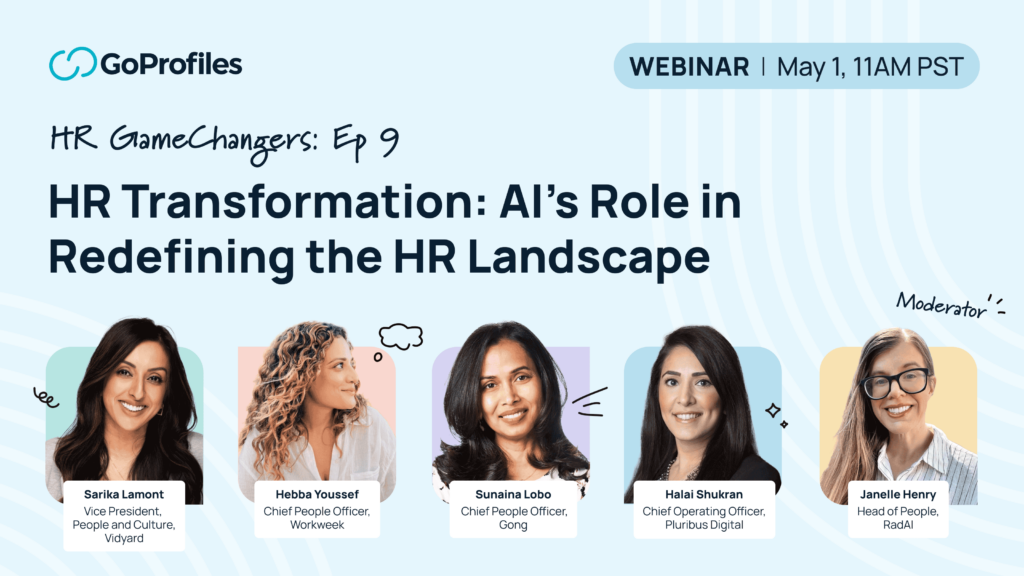
We’ll discuss the role and impact of AI in redefining the HR landscape.
Register now to stay ahead of the game in 2025 and beyond!
Charlotte O'Donnelly
Charlotte O'Donnelly is Senior PMM at GoLinks, GoSearch, and GoProfiles, where she leads positioning and GTM for enterprise AI products redefining how organizations find, access, and act on institutional knowledge. A 3x founding PMM with 9 years spanning PLG and enterprise sales, she specializes in bringing AI-native products to market — aligning teams around messaging that drives activation, expansion, and revenue.
AI doesn't create a trust gap. It exposes the one already there. Five HR and future-of-work leaders on what actually rebuilds employee trust during an AI rollout.