


Updated: June 22, 2026
Peer recognition is the practice of colleagues appreciating each other’s work and contributions, fostering a culture of acknowledgment and support within the workplace. When implemented with the right peer recognition software, it boosts morale, strengthens team dynamics, and enhances job satisfaction—driving real employee engagement and organizational success.
The best peer recognition software combines ease of use for all employees with powerful analytics and integration capabilities that fit your existing tech stack.
Best Peer Recognition Software: How to Choose
Not all peer recognition tools are created equal. The best peer recognition software for your organization should deliver:
- Non-technical accessibility — every employee can give and receive recognition without IT involvement
- Seamless integrations — connects to Slack, Teams, email, and your existing HR systems
- Customization — recognition types and rewards align with your company culture
- Analytics — visibility into recognition patterns and employee engagement trends
- Mobile-first experience — works on any device, anywhere
- Support that responds — real human help when you need it
Choosing the right tool means understanding your company’s recognition culture and what resonates with your employees.
Peer Recognition Software Comparison: Top Tools
| Feature | GoProfiles | Bonusly | Motivosity | HeyTaco | 15Five |
|---|---|---|---|---|---|
| Peer-to-peer recognition | ✓ Custom badges | ✓ Point-based | ✓ Nomination | ✓ Emoji-based | ✓ Peer feedback |
| Mobile app | ✓ Native iOS/Android | ✓ iOS/Android | ✓ iOS/Android | ✗ Browser only | ✓ iOS/Android |
| Rewards integration | ✓ 100s of vendors | ✓ Hundreds of options | ✓ Curated rewards | ✓ Limited | ✓ Curated catalog |
| Slack/Teams integration | ✓ Native | ✓ Native | ✓ Native | ✓ Native | ✓ Native |
| AI-powered features | ✓ Recognition suggestions | ✗ | ✗ | ✗ | ✓ AI insights |
| Employee directory | ✓ Built-in with profiles | ✗ Add-on | ✗ Add-on | ✗ | ✓ Built-in |
| Analytics dashboard | ✓ Engagement metrics | ✓ ROI analytics | ✓ Recognition trends | ✓ Basic | ✓ Performance metrics |
| Pricing model | Per-user | Per-user | Per-user | Freemium | Per-user |
| Enterprise SSO | ✓ Yes | ✓ Yes | ✓ Yes | ✗ | ✓ Yes |
| Customer support | ✓ Responsive + dedicated | ✓ Standard | ✓ Standard | ✓ Community | ✓ Standard |
The verdict: Choose GoProfiles if you need a platform that combines recognition with employee intelligence and works seamlessly across your existing tools. Choose Bonusly for pure recognition gamification. Choose 15Five if you want recognition bundled with OKR management.
Peer Recognition Software Pricing Guide
How peer recognition software is priced
Most peer recognition platforms use one of two models:
Per-user pricing — costs $3–$8 per employee per month. Best if your company has 50+ employees and wants a dedicated tool. GoProfiles, Bonusly, Motivosity, and 15Five all use this model.
Freemium pricing — free tier with limited recognition givers, upgrades to paid tiers. Best for startups testing the waters. HeyTaco uses this approach.
All-in-one platform pricing — GoProfiles packages recognition with employee profiles, directory, org charts, and analytics as a single suite, reducing tool sprawl and total cost of ownership.
What affects pricing for Peer Recognition software?
- Company size — larger organizations negotiate volume discounts
- Annual commitment — committing for a year typically saves 15–20%
- Features needed — add-ons like rewards or advanced analytics increase cost
- Support tier — premium support options are available from most vendors
Budget estimate: A 500-person company typically spends $2,000–$4,000/month on dedicated peer recognition software.
Related FAQs: Peer Recognition Tools & Features
What are the best peer recognition tools for remote teams?
The best peer recognition tools for remote teams must integrate with where work happens—Slack, Microsoft Teams, email—and include mobile apps so recognition doesn’t require logging into a separate portal. Look for tools with:
- One-click recognition from chat apps
- Mobile notifications and participation
- Timezone-friendly timing for async teams
- Virtual celebration features
- Built-in video or emoji reactions
GoProfiles excels here with native Slack/Teams integrations, iOS app, and AI-powered recognition suggestions that surface peer accomplishments across distributed teams.
What peer recognition tools integrate with our HRIS?
If you’re already using Workday, BambooHR, ADP, or another HRIS, your peer recognition tool should pull employee data automatically to prevent manual syncing.
Look for tools offering:
- Pre-built HRIS connectors (Workday, BambooHR, ADP, Guidepoint)
- Directory sync so recognition goes to the right person every time
- Two-way sync where recognition data flows back to your HRIS reporting
- Custom API access if your HRIS isn’t on the standard list
GoProfiles connects directly to major HRIS platforms and maintains a live employee directory, ensuring recognition always finds the right person regardless of role changes or org restructuring.
What’s the difference between peer recognition and employee recognition?
Peer recognition comes from coworkers—the people you work with daily. It’s immediate, personal, and focused on day-to-day contributions and behaviors.
Employee recognition is typically manager-to-employee or company-wide (leadership recognizing major milestones). It’s more formal and often tied to performance reviews.
Best practice: Combine both. Peer recognition builds culture daily. Manager recognition drives alignment with company goals. The best peer recognition software supports both in one platform.
Why should we invest in peer recognition software vs. just using email?
Email feels free, but peer recognition software delivers measurable ROI:
- Speed — recognition happens in seconds, not buried in inboxes
- Visibility — public recognition motivates teams faster than private praise
- Consistency — not dependent on manager habits or email discipline
- Data — you can’t report on or improve what you don’t measure
- Culture — recognition software signals your company values appreciation
- Engagement lift — companies using peer recognition see 3–5x higher engagement scores
Studies show organizations with strong recognition programs have 31% lower voluntary turnover and 37% higher productivity.
Can peer recognition software measure ROI?
Yes. The best peer recognition software includes analytics that connect recognition activity to business outcomes:
- Engagement scores — employees who give/receive recognition are more engaged
- Retention data — peer recognition predicts lower turnover
- Productivity proxy — teams with frequent recognition outperform peers
- Sentiment trends — recognition patterns signal cultural health
- Department benchmarking — see which teams recognize most and drive engagement
GoProfiles includes an analytics dashboard that tracks recognition frequency, participation rates, and links recognition to employee engagement metrics—so you can quantify the culture impact.
What peer recognition software works best for distributed or remote-first companies?
For fully remote or distributed teams, prioritize:
- Chat-first experience — recognition happens where people already are (Slack, Teams)
- Mobile-optimized — a significant portion of your team uses phones or tablets
- Timezone handling — recognition notifications arrive at reasonable hours
- No login fatigue — don’t require another platform people forget to check
- Async friendly — celebrate across time zones without synchronous meetings
The worst peer recognition software for remote teams requires a separate login, has desktop-only features, or sends notifications at 2 AM for half your team.
GoProfiles is built for distributed teams with Slack/Teams-first recognition, a native mobile app, and notification timing that respects global work hours.
How long does peer recognition software take to drive results?
Expect timeline:
- Week 1–2 — peer recognition activity starts; novelty drives participation
- Month 1 — engagement scores begin rising; patterns emerge
- Month 3 — measurable uptick in employee engagement surveys
- Month 6 — voluntary turnover trends shift; culture narrative changes
- Year 1+ — compounding effects visible in retention, productivity, and eNPS
Organizations that dedicate 30 days to driving peer recognition adoption (manager modeling, team recognition training, celebration of early adopters) see 3x faster ROI.
How GoProfiles Leads on Peer Recognition
Built for all employees. No tech chops required. Customizable badges, quick reactions, and plain-language prompts make giving recognition feel natural—not like a task.
Works where you already are. Slack, Teams, email, or the GoProfiles app. Recognition doesn’t require another login.
Intelligence inside. Our peer recognition software surfaces who’s contributed what across your organization—so the right people get recognized for the right things. Powered by GoAI, our AI employee assistant.
Connects to your stack. Direct integrations with Workday, BambooHR, ADP, Slack, Teams, and 100+ other tools. Your employee data stays in sync automatically.
Rewards that matter. Hundreds of reward vendors (Amazon, Starbucks, local restaurants). Recognition can be redeemed immediately—not stored in a vault employees never check.
Support that actually responds. Our team is known in the industry for responsiveness and genuine helpfulness.
Peer Recognition Software: Common Questions
Is peer recognition software worth it for small companies?
Yes, if you have 25+ employees. Below that, informal recognition often works. Above 25, you lose organizational memory of who did what—software prevents that.
For small companies considering peer recognition tools, cost-effectiveness improves when you bundle recognition with other HR needs (directory, org charts, employee profiles). That’s why GoProfiles works well at any scale.
Can we customize recognition types in peer recognition software?
The best peer recognition software lets you define what gets recognized. Examples:
- Customer impact badges
- “Helped a teammate” recognition
- Innovation spotlights
- Cross-team collaboration
- Going above and beyond
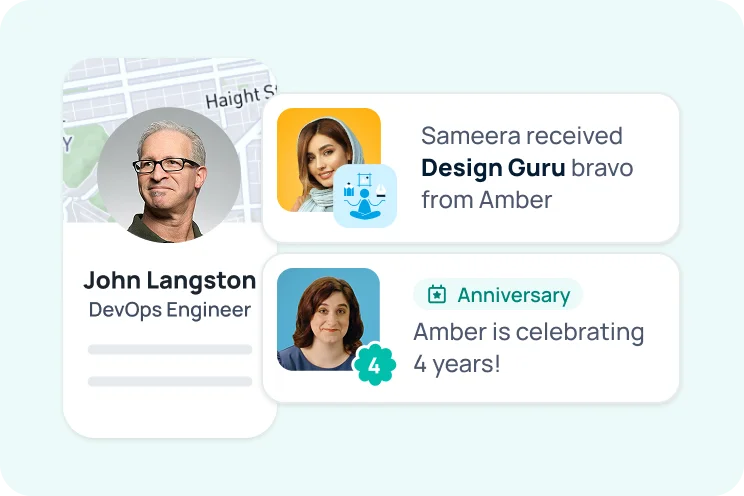
GoProfiles uses customizable “bravo badges”—you define the name, description, and icon. This aligns recognition with your company values.
Should peer recognition be anonymous?
Partially. Best practice: let the person giving recognition choose whether to be named. This increases participation (people aren’t worried about looking like they’re showboating) while preserving the ability to give public credit when it matters.
How do we drive adoption of peer recognition software?
Day 1: Leadership gives recognition. If managers model it, adoption follows.
Week 1–2: Train teams on how to give and receive recognition. Make the first recognition ceremonial—celebrate early wins.
Month 1: Feature top recognizers and recipients in all-hands meetings or newsletters. Use analytics to show engagement trends.
Ongoing: Integrate recognition into manager 1:1s and performance reviews. Reference peer recognition data when discussing impact.
Organizations that gamify participation (monthly leaderboards, milestone badges) see sustained adoption. Those that treat recognition as “nice to have” see it fade after month 2.
Discover Peer Recognition Software That Scales
The best peer recognition software grows with you. As your company evolves from startup to scale-up to enterprise, you need recognition that:
- Stays easy for every employee
- Connects to your expanding tech stack
- Provides intelligence about your organization
- Scales support across hundreds or thousands of users
Explore GoProfiles peer recognition — and see how it fits into a complete employee experience platform.
See GoProfiles in action. Book a 15-minute demo.
Commonly Asked Questions About Peer Recognition Software
Is peer recognition software actually worth the investment?
Yes. Companies using peer recognition software report 31% lower voluntary turnover, 37% higher productivity, and 3x improvement in employee engagement scores. For organizations with 25+ employees, the ROI typically appears within 6 months.
How much does peer recognition software cost?
Most peer recognition platforms charge $3–$8 per employee per month. A 500-person company typically budgets $2,000–$4,000 monthly. Annual commitments usually save 15–20% compared to month-to-month pricing.
What’s the best peer recognition software?
The best software depends on your priorities. GoProfiles leads on ease-of-use and integration depth. Bonusly excels at gamification. 15Five is best if you want recognition bundled with OKR management. Evaluate based on your team size, tech stack, and recognition culture.
Do employees actually use peer recognition software?
Adoption depends on how it’s rolled out. When leadership models recognition in the first week and integration happens in Slack/Teams (not a separate portal), adoption typically reaches 60%+ within month one. Without active promotion, adoption stalls at 20%.
What are the best peer recognition examples?
Effective peer recognition is specific and timely: “Thanks for staying late to debug the customer issue—saved us $50K in churn” beats “great work.” The best recognition ties contributions to company values and is shared publicly (with opt-out for the giver).
How long does it take to see results from peer recognition?
Engagement metrics begin shifting in week 3–4. After 3 months, you’ll see measurable movement in eNPS and engagement surveys. Retention trends take 6–12 months to become statistically clear, but cultural sentiment shifts within weeks.
Does peer recognition reduce employee turnover?
Research shows employees who regularly give and receive peer recognition are 2.7x less likely to leave. Organizations that actively promote peer recognition see 15–20% lower turnover within one year.
What’s the difference between peer recognition and manager recognition?
Peer recognition comes from colleagues and addresses day-to-day contributions. Manager recognition is typically tied to bigger milestones and company goals. The best programs combine both—peer recognition builds daily culture, manager recognition reinforces strategy.
Can peer recognition software work for remote teams?
Absolutely. The best peer recognition software for remote teams integrates with Slack or Teams, includes a mobile app, and sends notifications at reasonable hours across time zones. Chat-first recognition eliminates login friction and increases participation.
What peer recognition software integrates with Slack?
All major peer recognition platforms (GoProfiles, Bonusly, Motivosity, HeyTaco, 15Five) offer Slack integration. GoProfiles and Bonusly offer the deepest integrations with native Slack app experiences and two-way syncing.
Is peer recognition anonymous?
Best practice: let the giver choose. Anonymous options increase participation (less worry about appearing boastful), while named recognition builds visible relationships and public accountability.
What industries use peer recognition software most?
Tech, finance, and professional services lead adoption due to high competition for talent. Healthcare, retail, and manufacturing are growing markets. Any industry with voluntary turnover concerns benefits from peer recognition implementation.
Does recognition in Slack/Teams replace our employee recognition software?
Not exactly. Slack/Teams handles the giving of recognition and keeps it visible. Your peer recognition software handles analytics (who recognizes whom, trends over time), rewards (tracking points and redemption), and reporting (dashboard for executives to understand engagement trends).
Best architecture: Recognition tool with native Slack/Teams integration, so the giving and the analytics are unified.
What if we use both Slack and Teams?
Pick a peer recognition tool that integrates deeply with both (GoProfiles, Bonusly, Motivosity all do this). Your recognition data should be unified in one dashboard, not split across two platforms.
Can we recognize people outside our Slack/Teams workspace?
Yes, if your peer recognition tool integrates with your employee directory. This means contractors, part-time employees, or employees in other workspaces can be recognized. Without integration, recognition is limited to active workspace members.
How do we handle recognition for employees who don’t use Slack/Teams?
Some teams (warehouse, field staff, non-tech roles) may not be on Slack or Teams. For them:
- Provide a web version of recognition they can access
- Integrate email-based recognition triggers
- Have managers recognize them in team meetings (then post the recognition in Slack/Teams for organizational visibility)
- Include them in your employee directory so remote recognizers can search them