


ChartHop has grown into a full People Ops platform built around HR and Finance workflows like headcount planning, compensation, and performance management. That depth is valuable if you’re running enterprise workforce planning, but it also means employees often have little reason to open ChartHop outside of a review cycle. If you’re searching for the best ChartHop alternative because you want a platform built for recognition, skills discovery, and everyday connection instead, here’s an honest, source-checked comparison of where each platform wins.
Quick answer: If you’re looking for the best ChartHop alternative for employee recognition, skills discovery, and everyday org visibility, GoProfiles is the strongest fit. It combines peer recognition, AI-powered skills search, and flexible org charts with native dotted-line support, all on published, predictable pricing. ChartHop remains a solid choice for HR and Finance teams running full workforce planning, compensation cycles, and HRIS operations. GoProfiles is built for the employee side of that equation: connection, recognition, and finding the right person fast.
In short:
- Recognition: GoProfiles offers standalone, reward-redeemable Bravos surfaced in Slack or Teams; ChartHop’s recognition lives inside its Performance module, tied to review cycles
- Skills: GoProfiles makes skills searchable by every employee via AI; ChartHop maps skills for HR-led workforce planning
- Adoption: GoProfiles is self-serve and built for daily employee use; ChartHop’s complexity concentrates on the admin side
- Pricing: GoProfiles publishes its rates starting at $2/user/month; ChartHop requires a custom quote that scales with modules and headcount
What Is ChartHop?
ChartHop has grown well beyond org charts. Today it positions itself as a full People Ops platform spanning HRIS, headcount planning, compensation, performance management, engagement surveys, goals, and an AI Pro module that connects people, financial, and business data for HR and Finance teams. It’s a capable system of record for organizations that want one platform running headcount planning, comp cycles, and board-level workforce reporting. That breadth is also what makes it heavier to configure and roll out than a purpose-built employee directory.
What Is GoProfiles?
GoProfiles is an AI-powered employee directory, org chart, and recognition platform built for daily use by every employee, not just HR. It layers peer recognition with redeemable rewards, AI-driven skills search through GoAI, and dynamic org charts on top of your existing HRIS, so teams get a connection layer without replacing their system of record. GoProfiles is also natively embedded in Slack and Microsoft Teams, surfacing recognition, birthdays, anniversaries, and certifications directly where employees already work.
What Should You Look for in a ChartHop Alternative?
Teams searching for a ChartHop alternative are typically trying to:
- Give employees a reason to open a people platform daily, not just during review cycles
- Make peer recognition easy, frequent, and rewarding instead of buried in a performance tool
- Help employees find colleagues by skill or expertise, not just by title
- Visualize the org, including dotted-line and cross-functional relationships, without heavy setup
- Get clear, published pricing instead of a custom quote tied to module count
How Do GoProfiles and ChartHop Compare?
| Category | GoProfiles | ChartHop |
|---|---|---|
| Primary focus | Employee directory, org chart, peer recognition, and AI-powered people discovery | Full HRIS, headcount planning, compensation, performance, and workforce analytics |
| Peer recognition | Bravos system with optional rewards redemption, surfaced in Slack, email, Teams | Shoutouts and badges built into the Performance module, tied to review cycles |
| Skills discovery | AI-powered, employee-facing search (“who knows Figma?”) | Skill mapping for HR-led workforce planning and gap analysis |
| Org chart flexibility | Dotted-line and custom relationships | Matrix Teams as a separate configuration for cross-functional reporting |
| Pricing | Published tiers starting at $2 per user/month; Free plan available | Not published; quote-based, scales with modules and headcount |
| Setup | Self-serve, live in minutes with 50+ HRIS connectors | Demo and implementation required, with a steeper admin learning curve |
| Best for | Everyday employee connection and recognition | HR and Finance teams running full people operations |
Top 5 Reasons to Choose GoProfiles Over ChartHop
1. Recognition That’s Built to Be Used Every Day, Not Just During Review Cycles
ChartHop offers recognition, but it sits inside the Performance module. Peers can share shoutouts pushed to Slack as part of review workflows, alongside 360 reviews, OKR forms, and performance templates, a structure confirmed by ChartHop’s G2 review profile. It works, but it’s designed around HR-run cycles, not spontaneous, daily appreciation, and there’s no rewards layer attached to it.
GoProfiles treats recognition as a core, standalone experience instead. Bravos let any employee send customizable recognition at any time, with AI assistance to help write them and the ability to schedule recognition for milestones. Bravos can be redeemed for gift cards, charitable donations, and other rewards from a wide vendor catalog, and they post directly into Slack and Teams alongside birthday and anniversary celebrations. That makes recognition a habit rather than a checkbox tied to a review form.
2. AI-Powered Skills Search Anyone Can Use
ChartHop’s skills and role mapping is framed as an HR and leadership tool for closing skills gaps and planning upskilling at the org level. It lives in dashboards built for workforce planning, not in a place an individual employee would naturally search.
GoProfiles puts skills and interests directly on every employee profile and makes them searchable through GoAI. Ask “who knows Figma?” or “who’s worked on Salesforce integrations?” and get an answer immediately, no dashboard or HR request required. This turns skills data into something every employee can use to find help, not just something leadership uses to plan headcount.
3. An Employee-First Experience People Actually Adopt
ChartHop’s users praise its interface for viewing data: org charts and compensation details are easy to navigate. The friction shows up on the admin side. Reviewers point to a steep learning curve for admins, limited customization, and the challenge of keeping teams focused on one use case instead of getting lost across ChartHop’s many modules. Teams that don’t need full HRIS, comp planning, and performance management often end up paying for, and configuring, more platform than they use.
GoProfiles is built to be self-serve and employee-first from day one. Teams connect a CSV or one of 50+ HRIS integrations and have a live directory and org chart in minutes, no implementation project required. Features like the “Who Am I?” game, employee map, and celebrations are designed to pull employees back in regularly, which is why adoption tends to extend well beyond HR and leadership.
4. Visualize Your Org Your Way, Including Dotted-Line Reporting
Both platforms offer dynamic, auto-updating org charts. ChartHop supports cross-functional and indirect reporting through a separate Matrix Teams capability, which adds real value but requires its own setup.
GoProfiles supports dotted-line and custom reporting relationships natively, alongside a directory view and an interactive employee map for visualizing where teams sit globally. There’s no separate module to configure: the structure flexes to match how your org actually works, including matrixed and cross-functional teams, without extra setup.
5. Transparent Pricing That Scales Predictably
GoProfiles publishes its pricing in full: a free tier to get started, Basic at $2 per user/month, Pro at $4 per user/month, and a custom Enterprise tier for advanced security and SLAs. You can see exactly what you’ll pay before you ever talk to sales.
ChartHop doesn’t publish pricing. Every path leads to a demo request, and cost scales with the number of modules and the size of your org, which makes budgeting harder to plan and easy to end up paying for capabilities you don’t use. For teams that want predictable, transparent costs as headcount grows, GoProfiles is the clearer choice.
When Is ChartHop the Better Fit?
ChartHop is a strong choice for organizations that need a single platform to run headcount planning, compensation cycles, performance reviews, and engagement surveys, especially where HR and Finance need to work from shared data. If you’re trying to replace a patchwork of spreadsheets with one system of record for workforce planning, ChartHop’s depth is a real advantage. Many companies use ChartHop and GoProfiles together: ChartHop as the HR and Finance system of record, GoProfiles as the layer employees actually open every day.
Top ChartHop Alternative for Recognition and Connection: GoProfiles
If you want a platform that makes recognition, skills discovery, and org visibility part of daily work instead of a quarterly review exercise, GoProfiles is the strongest ChartHop alternative available. With transparent pricing, fast setup, and deep Slack and Teams integration, it’s designed to be the people platform employees actually want to use.
Ready to see how GoProfiles can benefit your team? Get started today and experience the difference firsthand.
Build a culture of connection and recognition with GoProfiles
Try for free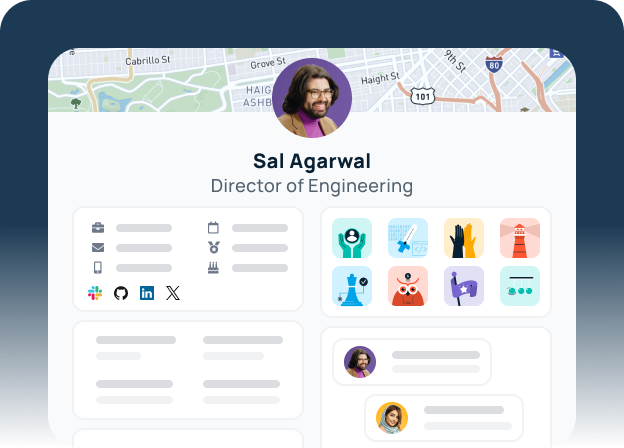
FAQ: GoProfiles vs ChartHop
Yes. GoProfiles is one of the best ChartHop alternatives for companies that want employees to actually use their people platform every day, not just during HR or performance cycles. It combines peer recognition with redeemable rewards, AI-powered skills search, and a flexible org chart that supports dotted-line reporting, all with published, transparent pricing. ChartHop remains the better fit for organizations that need a full HRIS with headcount planning, compensation cycles, and workforce analytics in one system.
Yes, but the two work differently. ChartHop’s recognition feature lives inside its Performance module, where peers can send shoutouts pushed to Slack as part of review workflows. GoProfiles’ Bravos system is available any time, not tied to a review cycle, and recognition is shared directly in email, Slack, or Teams. For teams that want recognition to be a daily habit rather than a performance-review feature, GoProfiles offers the more built-out option.
Yes. GoProfiles supports dotted-line and custom reporting relationships, so employees with matrixed or cross-functional reporting lines show up accurately. ChartHop offers similar functionality through a separate feature called Matrix Teams, which requires its own setup outside the standard org chart. If you need dotted-line reporting available by default instead of as an add-on, GoProfiles is the simpler option.
In most cases, yes. GoProfiles publishes its pricing in full: a free plan, Basic at $2 per user/month, and Pro at $4 per user/month, with custom Enterprise pricing for advanced security needs. ChartHop doesn’t publish pricing anywhere on its site, and cost scales with the number of modules you use and your headcount, so you’d need to request a ChartHop quote to make a direct, apples-to-apples comparison.
Not if you rely on ChartHop for headcount planning, compensation cycles, or as your full HRIS. GoProfiles is built to complement those systems, not replace them. Many companies run both: ChartHop as the HR and Finance system of record, and GoProfiles as the employee-facing layer for recognition, skills discovery, and org visibility. If your primary use of ChartHop is org charts and employee profiles rather than workforce planning, GoProfiles can fully replace it.
The most common reasons include:
Wanting peer recognition that isn’t tied to performance review cycles
Needing an AI-searchable skills directory employees can use without going through HR
Looking for simpler, faster day-to-day access to profiles and org charts
Preferring transparent, published pricing over a custom quote that grows with headcount and module count
These switching triggers show up consistently in ChartHop’s own user reviews, where admin-side complexity and module bloat are common complaints even though employees rate the day-to-day interface highly.