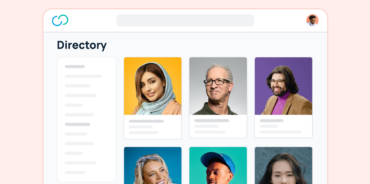


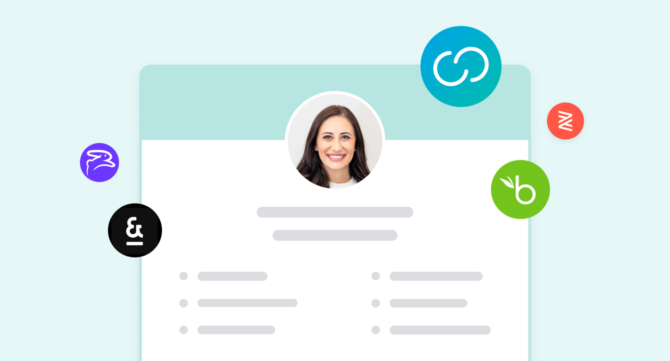
Quick Definition: Employee profile software is more than a staff directory. It creates rich, searchable profiles for every team member — capturing skills, roles, interests, location, and achievements in one centralized place.
Employee profile software — sometimes called employee directory software or people profile software — is a digital hub where employees can showcase their skills, interests, and achievements. Unlike traditional directories, it provides a comprehensive view of each team member, fostering transparency and enabling meaningful interactions that actually move work forward.
That matters more than ever. As remote and hybrid teams become the norm, the gap between colleagues widens — and employee profile software is one of the most practical tools for closing it, strengthening engagement, and improving retention.
In this guide, we cover:
- Two main types of employee profile software
- Benefits and key features to look for
- Expert picks for every team type, size, and budget
Types of Employee Profile Software
Employee profile software generally falls into two categories, each built around a different primary user.
1. Employee-First Experience
These tools are built for the people who use them day to day. The focus is on engagement, connection, and satisfaction — giving employees a space to present themselves, recognize peers, and collaborate across teams. Typical features include customizable profiles, peer recognition, social collaboration, and feedback channels.
2. HR-First Experience
These tools are built for the teams managing the workforce. The focus is on process efficiency, data integrity, and compliance — giving HR professionals the structure they need to make informed decisions at scale. Typical features include centralized employee databases, compliance management, performance tracking, and analytics dashboards.
How to Choose the Right Type
The right choice comes down to who you’re primarily solving for — your employees or your HR team. Employee-first platforms win on culture, engagement, and connection. HR-first tools win on data, compliance, and process. Most growing organizations eventually need both.
Benefits of Employee Profile Software
Investing in employee profile software delivers measurable returns across culture, productivity, and HR efficiency – here’s how:
- Enhanced Transparency: When employees can see each other’s backgrounds, expertise, and contributions, trust builds naturally, and openness becomes part of the culture.
- Improved Collaboration: A shared view of who knows what breaks down departmental silos, making it easier to find the right person, share knowledge, and solve problems across teams.
- Boosted Employee Engagement: Peer recognition features — badges, kudos, shoutouts — give employees a simple way to acknowledge each other. Small gestures compound into a culture where people feel genuinely seen.
- Efficient Onboarding: New hires get up to speed faster when they can immediately see who their colleagues are, what they do, and how the organization fits together. Less confusion, stronger starts.
- Streamlined Talent Management: With a clear view of employees’ skills, interests, and career goals, HR can make smarter decisions about training, internal mobility, and succession planning.
- Facilitated Communication: Native integrations with Slack and Microsoft Teams mean employees don’t have to leave the tools they already use to find and connect with colleagues.
- Data-Driven Insights: Built-in analytics surface engagement trends, recognition patterns, and workforce gaps — giving HR leaders the data to act before small issues become big ones.
- Remote Work Support: Employee maps, time zone indicators, and async-friendly profiles help distributed teams feel less distant — and more like a team.
Key Features of Employee Profile Software
Not all employee profile software is built the same. These are the features worth prioritizing:
Comprehensive employee profiles — Skills, interests, work anniversary, location, contact info, and job title — everything a colleague needs to know, in one place.
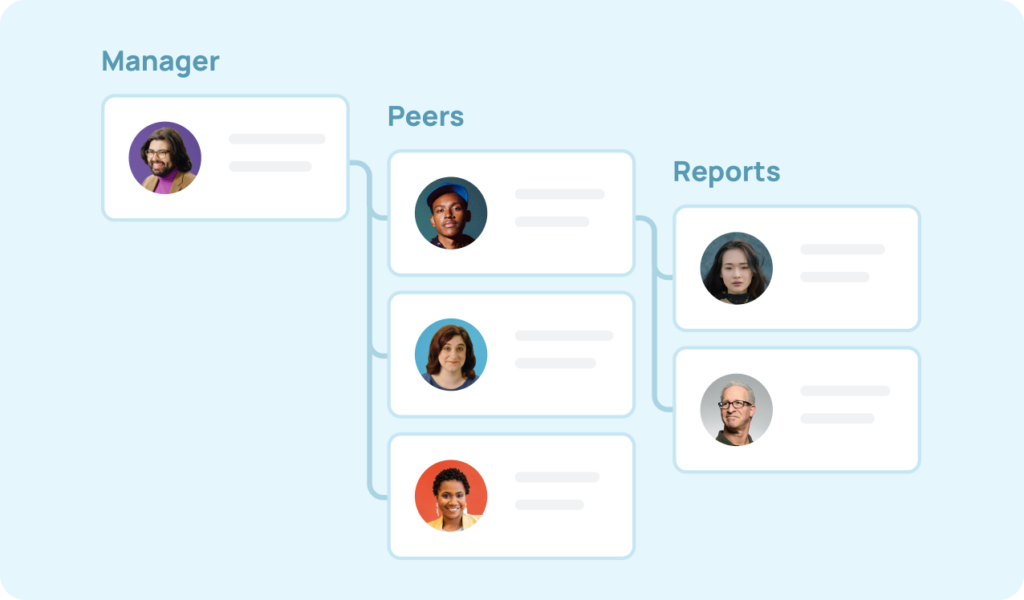
Org chart visualization — Interactive charts that map reporting lines, team structures, and how the organization fits together at a glance.
Employee map — A geographic view of your distributed team, making it easy to find colleagues by location, region, or time zone.
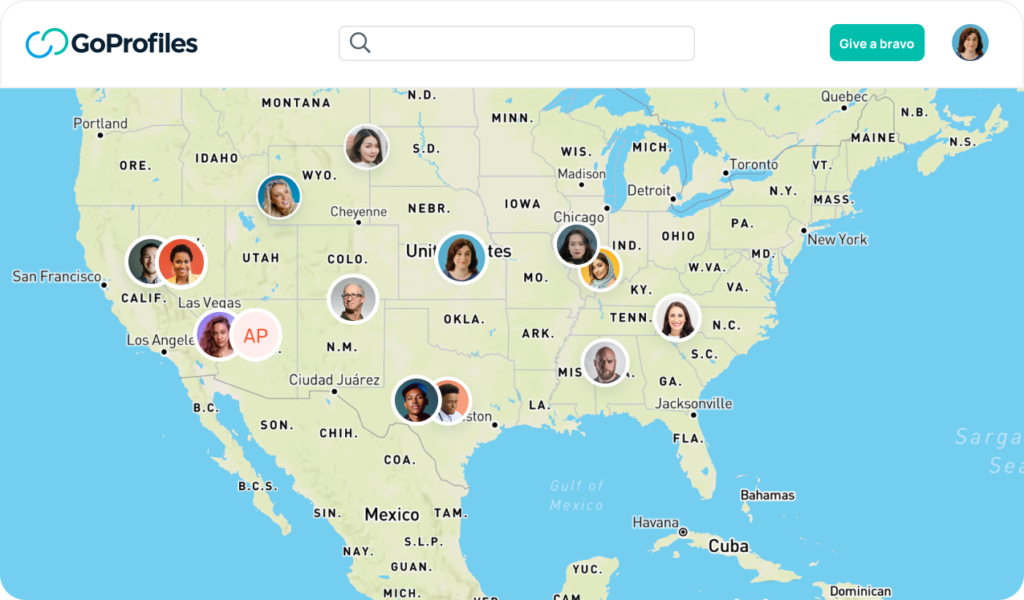
Peer recognition — Built-in badges and kudos so employees can acknowledge each other’s contributions without leaving the platform.
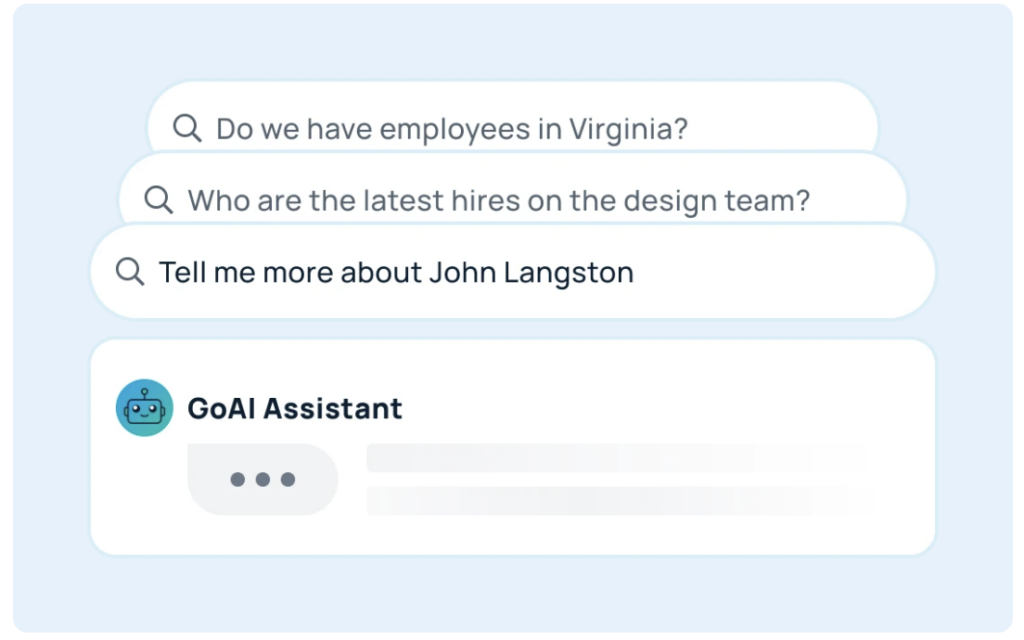
AI-powered assistance — Ask a question, get an answer. Generative AI surfaces employee information instantly, without manual searching.
Communication tool integrations — Native connections with Slack, Microsoft Teams, and your HRIS so the tool fits into workflows people already use.
Smart search and filters — Find the right person fast, by skill, department, location, or any combination of profile attributes.
People analytics — Engagement metrics, recognition trends, and workforce insights that help HR act on data rather than instinct.
Mobile app — Full access to profiles, org charts, and recognition from any device, anywhere.
Security and compliance — Enterprise-grade data protection that keeps sensitive employee information private and compliant.
Feature Comparison: 12 Employee Profile Software Tools Side by Side
| Tool | Org Chart | Peer Recog. | AI | Map | Analytics | HRIS Sync | Mobile |
| GoProfiles | ✅ | ✅ | ✅ | ✅ | ✅ | ✅ | ✅ |
| Pingboard | ✅ | ❌ | ❌ | ❌ | ❌ | ❌ | ✅ |
| Names & Faces | ✅ | ❌ | ❌ | ❌ | ❌ | ❌ | ✅ |
| ChartHop | ✅ | ❌ | ❌ | ✅ | ✅ | ❌ | ❌ |
| Workday | ✅ | ❌ | ❌ | ❌ | ✅ | ✅ | ✅ |
| Bamboo HR | ✅ | ❌ | ❌ | ❌ | ✅ | ✅ | ✅ |
| Lattice | ❌ | ✅ | ❌ | ❌ | ✅ | ✅ | ✅ |
| ADP Workforce Now | ❌ | ❌ | ❌ | ❌ | ✅ | ✅ | ✅ |
| Zenefits | ❌ | ❌ | ❌ | ❌ | ✅ | ✅ | ✅ |
| Culture Amp | ❌ | ✅ | ❌ | ❌ | ✅ | ✅ | ✅ |
| 15Five | ❌ | ✅ | ❌ | ❌ | ✅ | ✅ | ✅ |
| TINYpulse | ❌ | ✅ | ❌ | ❌ | ✅ | ❌ | ✅ |
Top 12 Employee Profile Software Tools
Employee-First Experience Tools
1. GoProfiles
GoProfiles is an employee profile software platform built to deepen workplace connections. Where a basic staff directory stops at names and titles, GoProfiles goes further — detailed bios, work anniversaries, locations, and social profiles, all in one searchable hub. Teams use it to celebrate milestones, recognize peers through Bravos, and find anyone in the organization instantly using generative AI. Ask it “What time zone is Julie in?” or “What is Jerry’s email?” and you have your answer in seconds.
🏆 Best for: Companies prioritizing employee engagement, recognition, and a connected remote or hybrid culture.
Features:
| ✅ Employee profiles | ✅ Interactive org chart |
| ✅ Employee directory | ✅ Employee map |
| ✅ Team insights & analytics | ✅ Generative AI-powered |
| ✅ Milestone celebrations | ✅ Dynamic peer recognition |
| ✅ Team building game | ✅ Auto sync: 50+ HRIS apps |
| ✅ Employee-first experience | ✅ iOS mobile app |

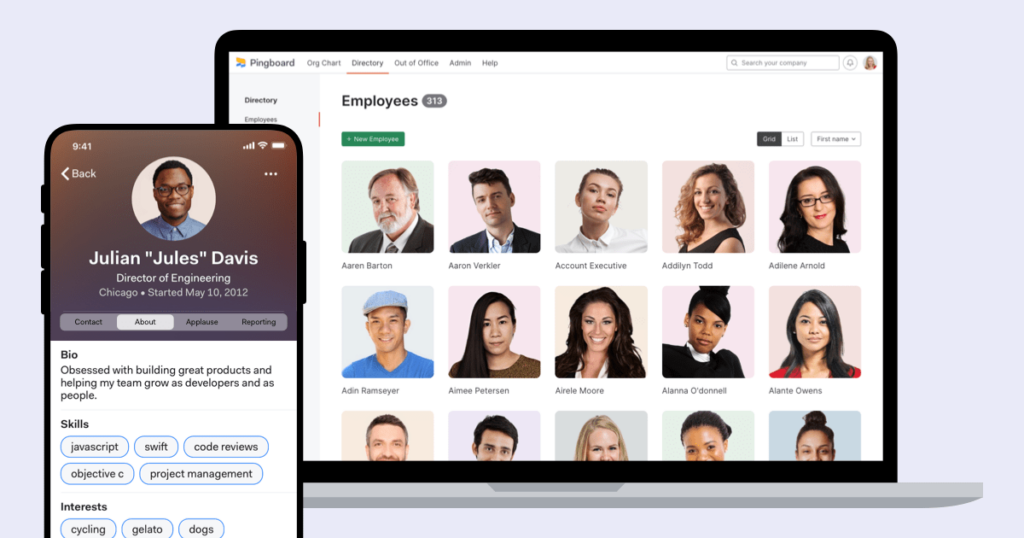
2. Pingboard
Pingboard is a straightforward employee profile software tool focused on org chart visualization and employee directories. Note that Pingboard was recently acquired by Workleap, and some customers have reported usability issues following the transition, which is worth factoring into a long-term buying decision.
🏆 Best for: Organizations that need a clean org chart and directory, and are comfortable evaluating how the Workleap acquisition may affect the product roadmap.
Features:
| ✅ Employee profiles | ✅ Interactive org chart |
| ✅ Employee directory | ❌ Employee map |
| ❌ Team insights & analytics | ❌ Generative AI-powered |
| ❌ Milestone celebrations | ❌ Dynamic peer recognition |
| ✅ Team building game | ❌ Auto sync: 50+ HRIS apps |
| ✅ Employee-first experience | ✅ iOS mobile app |
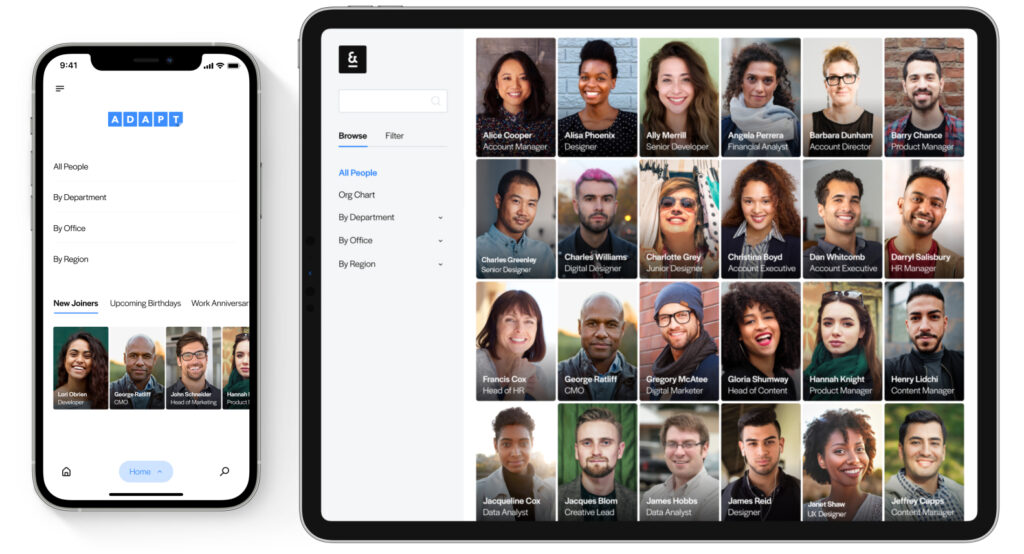
3. Names & Faces
Names & Faces does exactly what the name suggests — it helps people learn who their colleagues are. Employee bios, work anniversaries, and social profiles give smaller teams a lightweight way to put faces to names and build familiarity across the organization, without the overhead of a more complex platform.
🏆 Best for: Small to mid-size teams that want a simple, focused employee directory without extra features to manage.
Features:
| ✅ Employee profiles | ✅ Interactive org chart |
| ✅ Employee directory | ❌ Employee map |
| ❌ Team insights & analytics | ❌ Generative AI-powered |
| ❌ Milestone celebrations | ❌ Dynamic peer recognition |
| ❌ Team building game | ❌ Auto sync: 50+ HRIS apps |
| ✅ Employee-first experience | ✅ iOS mobile app |
4. ChartHop
ChartHop combines org chart visualization with workforce planning and people analytics — making it less of a people directory and more of a strategic HR tool. People Ops teams use it to map headcount, model organizational changes, and surface workforce trends alongside the employee profile data that drives those decisions.
🏆 Best for: HR and People Ops teams that need workforce planning and headcount analytics, and want employee profiles embedded in that broader operational context.
Features:
| ✅ Employee profiles | ✅ Employee directory |
| ✅ Employee map | ✅ Interactive org chart |
| ✅ Team insights & analytics | ❌ Generative AI-powered |
| ❌ Milestone celebrations | ❌ Dynamic peer recognition |
| ❌ Team building game | ❌ Auto sync: 50+ HRIS apps |
| ❌ Employee-first experience | ❌ iOS mobile app |
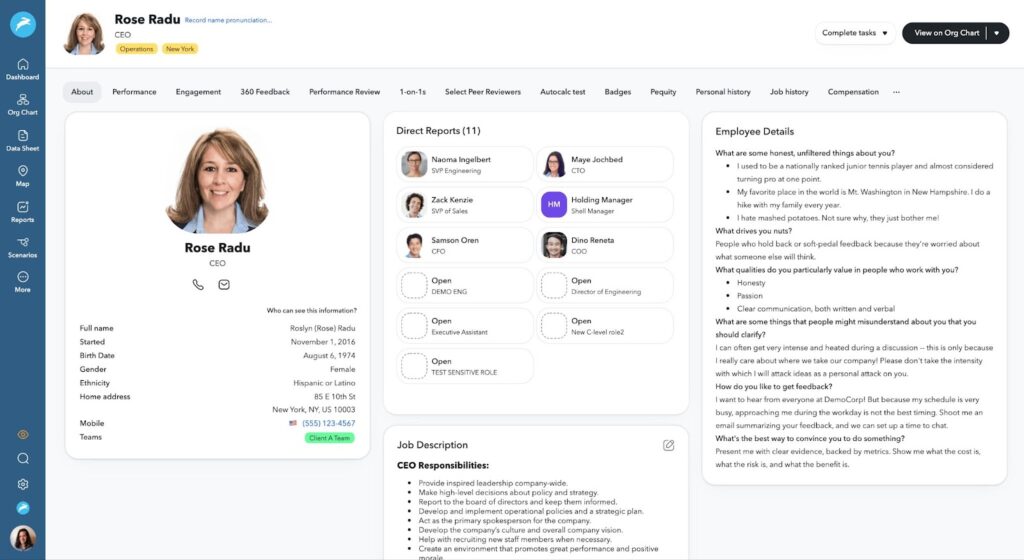
5. Workday
Workday is an enterprise HRIS where employee profiles are one piece of a much larger system — sitting alongside talent acquisition, performance management, payroll, and workforce planning in a single integrated suite. For large organizations that need everything connected, that breadth is the point. For teams that just need strong employee profiles, it’s likely more platform than required.
🏆 Best for: Large enterprises that need a fully integrated HRIS and want employee profile functionality without managing a separate tool.
Features:
| ✅ Employee profiles | ✅ Employee directory |
| ✅ Interactive org chart | ❌ Employee map |
| ✅ Analytics | ✅ HRIS integrations |
| ❌ Peer recognition | ✅ iOS mobile app |
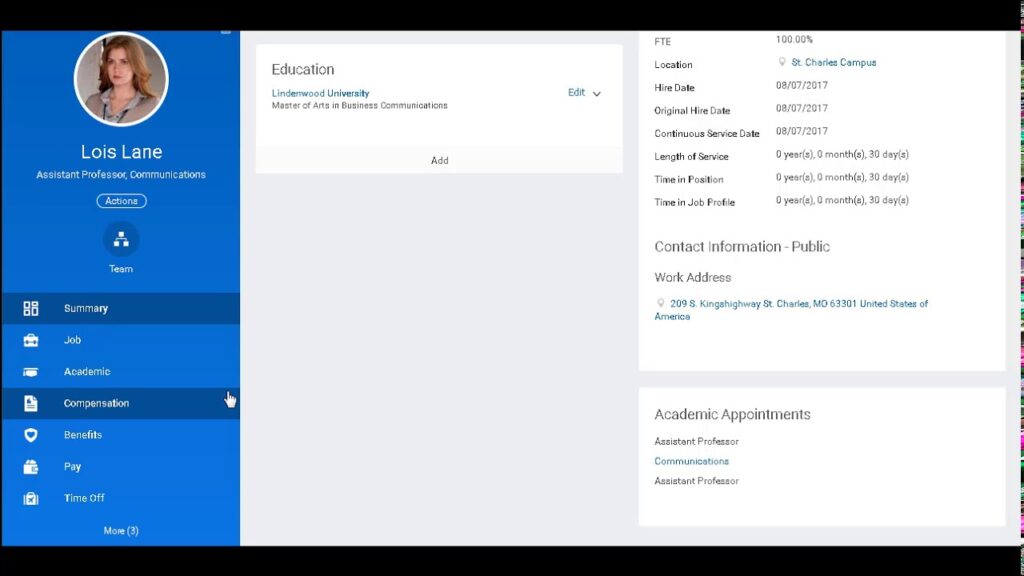
6. BambooHR
BambooHR is where many small and mid-size businesses begin their HR stack. The essentials are all there — employee profiles, records management, onboarding, time-off tracking, e-signatures — without the implementation overhead of an enterprise system.
🏆 Best for: Small and mid-size businesses that want a reliable, easy-to-implement HR system with solid employee profile and onboarding functionality built in.
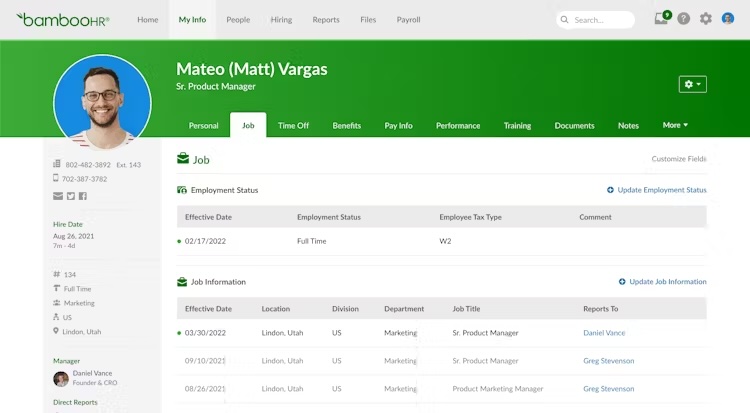
7. Lattice
Lattice is a performance management platform that happens to include employee profiles — not the other way around. The profiles are most useful in context: tied to OKRs, 1:1s, performance reviews, and career development frameworks that give HR teams a complete picture of each employee’s growth trajectory, not just their contact details.
🏆 Best for: HR teams that want employee profiles embedded in a performance management workflow, rather than as a standalone people directory.
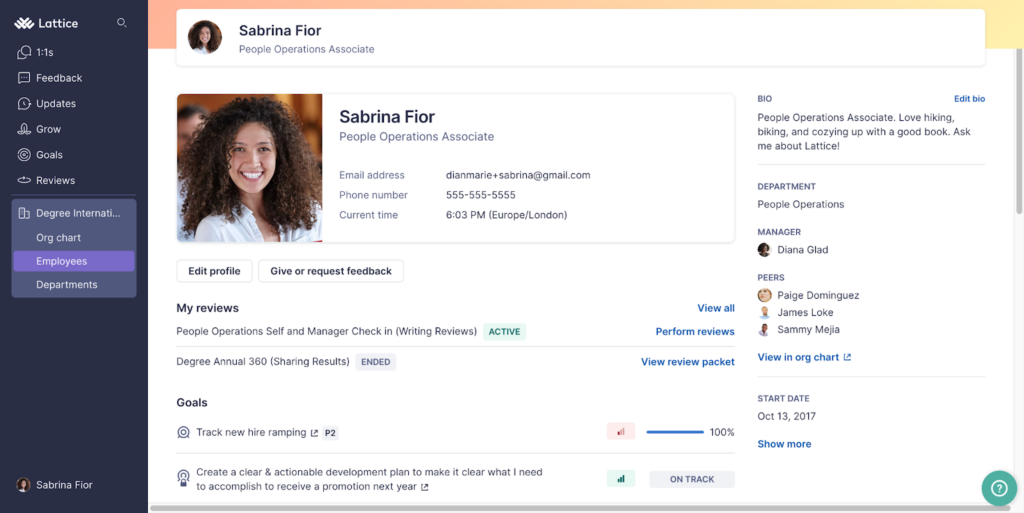
8. ADP Workforce Now
ADP Workforce Now is built around payroll and compliance first — employee profiles are part of the package, not the headline feature. For mid-to-large businesses already in the ADP ecosystem, having everything in one platform removes the need to manage separate tools.
🏆 Best for: Mid-to-large businesses already invested in ADP infrastructure, or those prioritizing payroll and compliance with employee profiles as a secondary requirement.
9. Zenefits
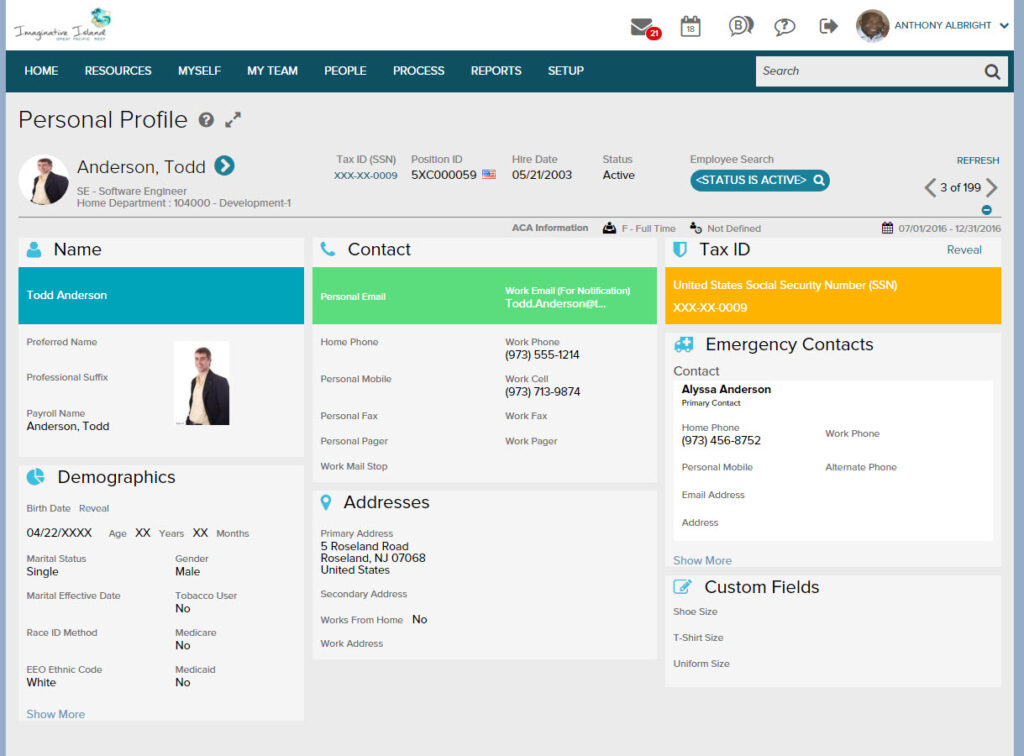
Zenefits bundles employee profiles, payroll, benefits, and compliance management into one system — built for growing companies that need real HR infrastructure without enterprise-level complexity or cost.
🏆 Best for: Startups and scaling companies that need HR, benefits, and employee profiles in one affordable system — and don’t yet need enterprise-level depth.
10. Culture Amp
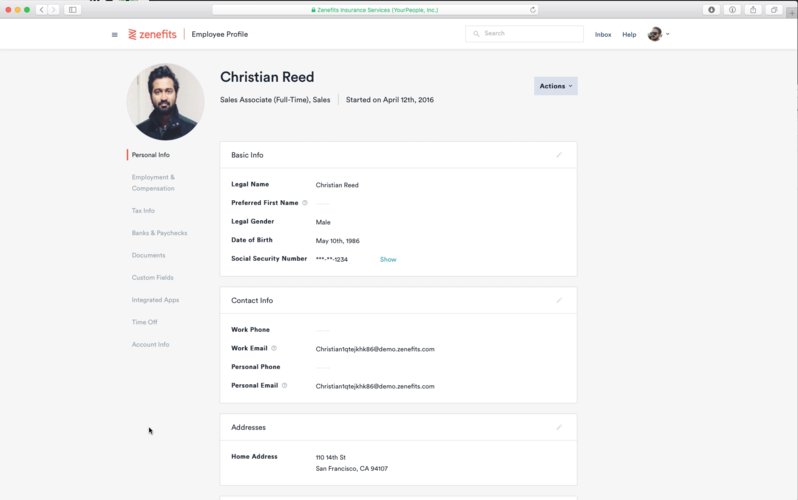
Culture Amp is built around feedback and measurement — engagement surveys, 360° reviews, DEI analytics, and performance tools that help organizations understand how their people are actually doing. Employee profiles are part of the platform, but the real value is in the data Culture Amp surfaces and what HR teams do with it.
🏆 Best for: People-focused organizations that want employee profiles embedded in a broader culture measurement and feedback platform.
11. 15Five
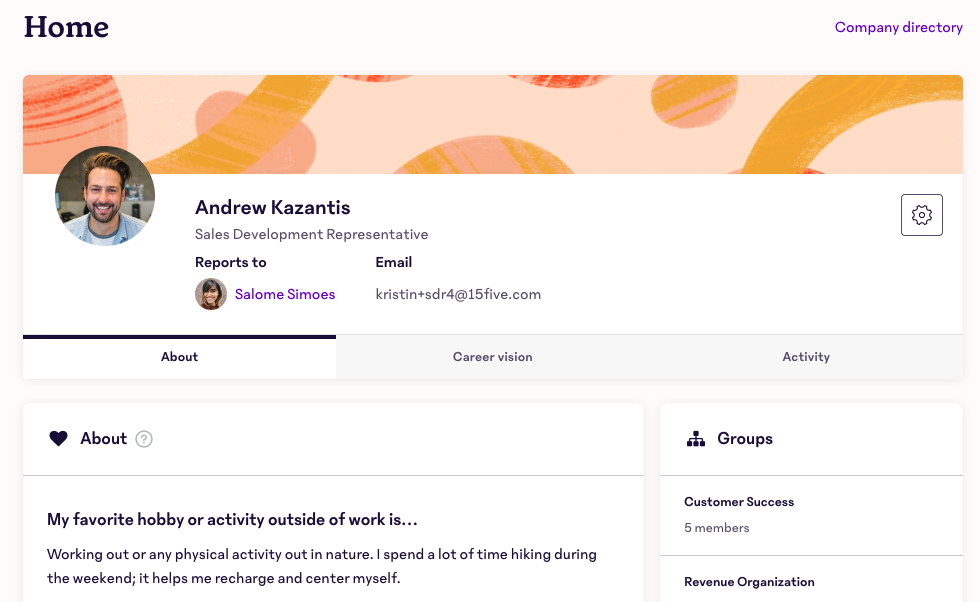
15Five is a performance management platform where employee profiles serve as the foundation for ongoing manager-employee relationships. OKRs, continuous feedback, pulse surveys, and recognition all connect back to the same profile — giving managers a running record of each person’s goals, progress, and engagement over time.
🏆 Best for: Managers and HR teams that want employee profiles tied to performance goals, weekly check-ins, and continuous feedback.
12. TINYpulse
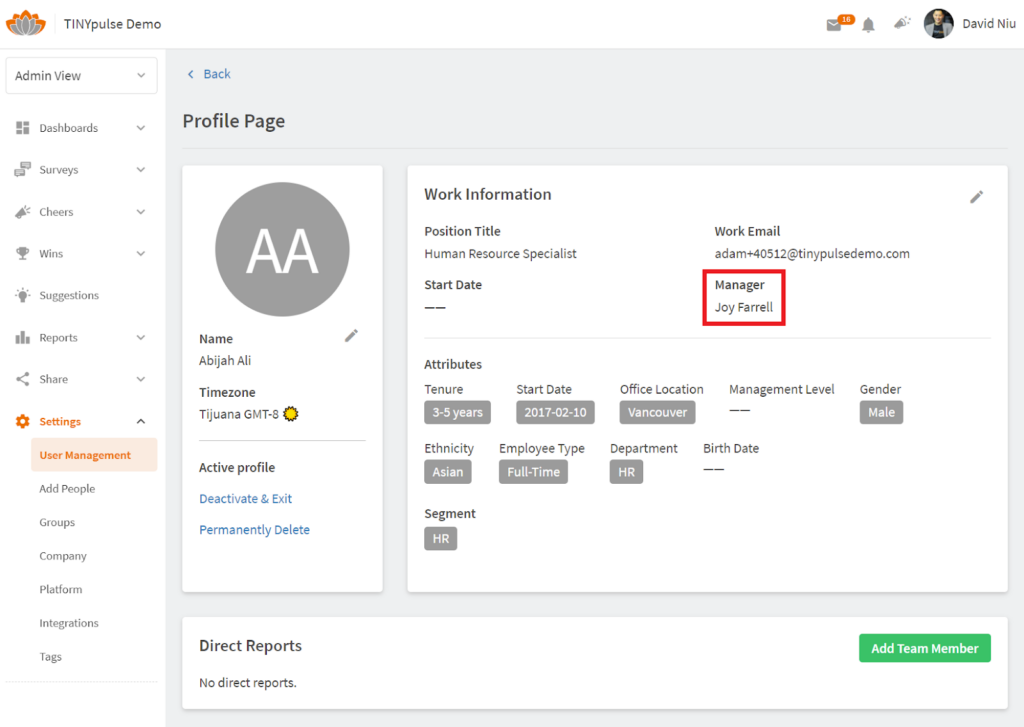
TINYpulse is built around one idea: leaders can’t improve what they can’t hear. Anonymous feedback surveys, peer recognition, and performance evaluations surface sentiments that don’t always reach management. Employee profiles are basic, but sufficient for what the platform is designed to do.
🏆 Best for: Teams that want anonymous pulse surveys and peer recognition as their primary use case, with employee profiles as supporting functionality.
Build Genuine Connections with GoProfiles
The right employee profile software does more than store contact information — it gives people a way to find and recognize each other, and to feel like part of the same team regardless of where they work.
GoProfiles brings that together in one place: detailed profiles, org chart visualization, peer recognition, AI-powered search, and automatic sync with 50+ HRIS apps. Everything your team needs to stay connected as it grows.
Ready to get started? Schedule a demo and see how GoProfiles builds the connections that keep your team engaged and connected as it grows.
Build a culture of connection and recognition with GoProfiles
Schedule a demo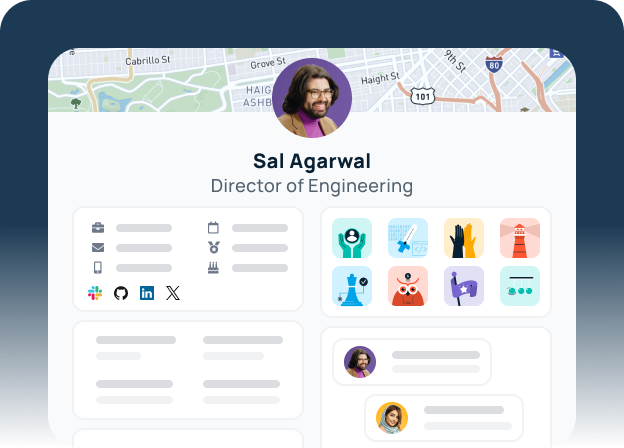
Employee Profile Software: Frequently Asked Questions
It depends on what your team needs most. GoProfiles is the top choice for organizations focused on engagement, recognition, and remote team connection. For HR-focused workflows, BambooHR and Workday are the stronger options. The comparison table above covers all 12 tools side by side if you’re still deciding.
Yes. BambooHR, Zenefits, Names & Faces, and GoProfiles are all well-suited to smaller and growing teams, with pricing and feature sets that scale as you hire.
Most modern platforms integrate with popular HRIS systems, payroll tools, and communication platforms like Slack and Microsoft Teams. GoProfiles syncs automatically with 50+ HRIS apps, keeping profile data up to date without manual updates.
It gives distributed teams visibility into who their colleagues are, what they’re skilled at, and where they’re located. Employee maps, time zone indicators, and AI-powered search reduce the friction of working across locations and time zones.
Reputable platforms implement role-based access controls, data encryption, and SOC 2 compliance to protect sensitive employee information. Security practices vary by vendor, so it’s worth verifying certifications during your evaluation.
Most standalone tools are priced per employee per month, depending on features and team size. Enterprise platforms like Workday and ADP use custom pricing. Most vendors offer a free trial or demo before you commit.
By giving HR visibility into employees’ skills, interests, and career goals, profile software makes it easier to identify skill gaps, spot high performers, and build development programs tailored to individual needs rather than org-wide assumptions.
An HRIS handles the operational side — payroll, benefits, compliance, and workforce data. Employee profile software handles the human side — helping people find each other, recognize contributions, and build genuine workplace connections. The two serve different purposes, and many organizations run both.