Need a little productivity boost? Join our monthly newsletter and we’ll go/link you to the latest tips and trends in tech!
Executives don’t stall because they stop learning. They stall because they hold on to the habits that got them promoted. The leader who wrote the doc, built the deck, and always had the answer now has to delegate, coach, and reckon with what they don’t know. Many of the instincts that earned the title start working against it.
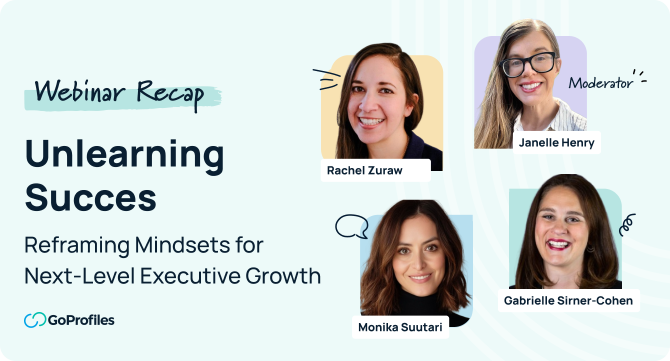
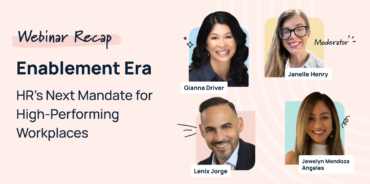
In Episode 25 of the GoProfiles HR GameChangers series, moderator Janelle Henry sat down with senior people leaders to explore how unlearning success drives executive growth: why executives plateau, how to spot a strength that has turned into a limitation, and how HR teams can help leaders let go of what no longer serves them.
Reframe, don’t erase. The instincts that built a career don’t disappear with a new title. Unlearning works best as reframing: knowing when a skill still helps and when it holds you back.
Lead through context. As leaders move up, their teams often include specialists with deeper expertise than their own. Their value comes from the business context they bring, not from checking the work.
Notice before fixing. Self-awareness starts with noticing a pattern before trying to fix it. Tracking when it shows up and who brings it out gives leaders the context to respond differently next time.
Name the shift. When leaders change how they lead, they should prepare their teams before the change takes hold. Naming it openly makes it safer for everyone else to try something new.
Build sideways connections. Executive growth depends on looking across the organization, not just down. Visibility beyond your own team and a close understanding of the business build credibility a title alone can’t.
New Leaders Outgrow the Habits That Got Them Promoted
The first test of unlearning usually arrives with a leader’s first direct reports. The instinct that earned the promotion – being the one who always gets it done – suddenly gets in the way of a team that needs guidance. Gabrielle Sirner-Cohen, Former Chief People Officer at Acoustic & FullStory, recalled sitting at her laptop late one night as a new manager, unsure how to lead her new team. She’d been promoted for getting things done, and all she wanted was to write the doc and build the slides herself. Her manager’s advice – delegate before you’re ready – still shapes how she coaches executives today.
The next transition is often harder: moving from managing a single function to leading several teams, including specialists who know their areas better than the leader. Rachel Zuraw, Director of People at Ashby, described moving from go-to problem solver to overseeing functions outside her own background, and learning to trust the expertise she hired for instead of mastering every detail herself.
With each step up, many leaders wrestle with the sense that they don’t belong in the room. Monika Suutari, VP, People Experience at Cast & Crew, recalled a mentor who reframed that feeling for her.
“You’re not in the wrong room. You’re just in a bigger room.”
—Monika Suutari, VP, People Experience at Cast & Crew
Seniority doesn’t erase that uncertainty. Janelle saw the same thing the first time she joined a company-wide initiative with senior leaders: no one had the problem fully solved.
“It was both enlightening and frightening to realize that we’re all just doing the best we can, no matter the title.”
—Janelle Henry, Talent and Brand, Stripe
As responsibilities grow, what counts as success shifts with them. Credibility stops coming from having all the answers and starts coming from the team’s results. For Gabby, the reward shifted from personal recognition to hearing great things about her team. Rachel described the satisfaction of acting as a force multiplier: as a leader’s scope grows, so does the impact of the teams they develop.
Strengths Can Become Limits Over Time
Old habits tend to resurface under pressure, especially when doing the work yourself feels faster than delegating. Gabby treats those moments as a cue to bring others in. Monika uses a simpler test.
“If my team can’t function without me, I’m doing something wrong.”
—Monika Suutari, VP, People Experience at Cast & Crew
Experience brings its own risk. Over time, leaders build an invisible playbook and carry it from company to company without checking whether it still fits. Monika saw this firsthand when she moved from a large enterprise to a midsize organization.
“Playbooks don’t always travel. … Does it actually work here, or am I just operating off of assumption?”
—Monika Suutari, VP, People Experience at Cast & Crew
Recognizing the need to change is only half the work; leaders also have to bring their teams along. Gabby described a founder who realized his visionary style no longer fit a company that had grown beyond anything he’d led before, so he brought in a coach focused on operating cadences and KPIs. Before making any changes, he told each executive to expect him to show up differently. By modeling the change openly, he made it safe for others to try new approaches too.
Letting Go Takes Time, Trust, and Transparency
Stepping back requires a degree of vulnerability that runs against most executive instincts. Leaders are expected to come across as credible and in control, yet openness about what they’re still learning builds trust, psychological safety, and stronger teams.
Senior leaders also have to shift their sense of team from their direct reports to their peers. That peer group becomes a forcing function: representing an entire function to colleagues focused elsewhere pulls leaders out of individual contributor work. When an attendee asked how to make the shift, Janelle recommended naming it often, especially when peers start competing for resources.
Senior leaders also learn to lead through context rather than expertise. Gabby learned this leading a function she had never worked in herself. Her value came from the business context she brought, not from doing the work.
“It wasn’t my job to check if they were doing everything right. My job was to bring the context.”
—Gabrielle Sirner-Cohen, Former Chief People Officer at Acoustic & FullStory
For many leaders, the hardest part of growing into a bigger role is ceding control over how the work gets done.
“Just because someone didn’t do something the exact way that I would have done it doesn’t make their way worse. It just means they’ve approached it differently.”
—Rachel Zuraw, Director of People at Ashby
Handing off work takes time and transparency. Rather than handing off responsibilities all at once, leaders can name a clear transition period: they lead at first with the new owner alongside, then gradually step back. That structure builds trust without losing sight of the work.
Executive Growth Begins With Self-Awareness
Building self-awareness means paying attention to habits that have become automatic. When a 360 review or upward feedback survey surfaces a blind spot, Gabby encourages leaders to watch for the pattern before trying to fix it: when it shows up, who brings it out, and how it feels in the moment. That pause slows things down enough to try a different response.
“Understanding the circumstances usually slows things down and gives you a chance to show up differently.”
—Gabrielle Sirner-Cohen, Former Chief People Officer at Acoustic & FullStory
Self-awareness also depends on leaders being open to what they hear. Rachel has seen leaders on both ends of the spectrum: some take feedback in and adapt quickly, while others explain it away by pointing to organizational change or disruption. That context may be real, but it doesn’t make the feedback wrong.
Blocking regular time for reflection turns self-awareness into a habit. Anonymous check-ins with a team, kept separate from performance reviews, invite honest input and show that leaders are willing to receive the same feedback they give. Monika blocks time for this every quarter, sending her team a short anonymous survey on her leadership behaviors.
People leaders can also help executives see patterns they might miss. Because HR sees across the whole leadership team, it can point out where some leaders move faster or hesitate, and frame those gaps as natural growth areas for the role. Gabby described using this approach to help newly promoted executives step more fully into their roles.
Reaching the Next Level Means Looking Across the Organization
For aspiring leaders, the path forward starts with visibility. Strong work often goes unnoticed outside a small circle, and that makes it harder for advocates to champion a promotion. Monika encourages emerging leaders to build relationships beyond their immediate team and connect what they’re working on to other parts of the organization.
“If I’m the only person in that room that knows your name, I have a harder hill to climb in order to get you into the right seat.”
—Monika Suutari, VP, People Experience at Cast & Crew
Perspective matters as much as visibility. Rachel encouraged aspiring leaders to step back from the task in front of them and ask how their work connects to other teams. Building that cross-functional line of sight early pays off as responsibilities grow.
“At the senior leadership level, you’re not looking down, you’re looking across.”
—Rachel Zuraw, Director of People at Ashby
Understanding the business itself completes the picture. Knowing the customers, the product’s value, and the financials lets people leaders show how their work contributes, and that builds credibility across the organization.
“I would never pass up an opportunity to get closer to the business and to the customer.”
—Gabrielle Sirner-Cohen, Former Chief People Officer at Acoustic & FullStory
Unlearning Is a Practice, Not a Moment
No promotion comes with a complete set of leadership skills. The habits that earn a title, like doing the work yourself, always having the answer, and owning every decision, need rethinking at each step up. HR teams can accelerate executive growth by pointing out patterns, making time for reflection, and creating the safety for leaders to acknowledge what they’re still learning. For leaders, that work is ongoing: every new role is a chance to ask which strengths still serve them.
Join us as we explore how HR leaders are planning 2027 budgets as AI reshapes how teams work, competing priorities stretch tighter resources, and expectations to show business impact keep rising.
Emily Deuser is Content Manager at GoLinks, GoSearch, and GoProfiles, where she helps enterprise teams cut through the noise around workplace AI and find tools that actually make knowledge accessible. She specializes in turning complex productivity challenges into clear, actionable guidance that helps teams work smarter every day.
Engagement shows whether people want to do great work. Employee enablement shows whether they can. In Episode 24 of HR GameChangers, people leaders share how HR can close that gap.
AI doesn't create a trust gap. It exposes the one already there. Five HR and future-of-work leaders on what actually rebuilds employee trust during an AI rollout.